
Are gentler cancer treatments already inside us? How immunotherapy could change cancer care
06 April 2026
Many of the cancer treatments we have today save lives. But they can also come at a huge cost.
For 18-year-old Ada, surviving an aggressive rare sarcoma in her knee bone meant losing her leg.
That’s why at Peter Mac, researchers are asking a powerful question: what if cancer treatment could be just as effective as chemotherapy, or surgery, but far gentler on the body?
That question sits at the heart of the work led by Associate Professor Ian Parish, Head of the Tumour Immunity and Immunotherapy Laboratory at Peter Mac.
The power at the heart of the immune system
A/Prof Parish’s research focuses on the immune system – the body’s own defence mechanism – and how it could be harnessed to transform cancer treatment. In particular, he’s investigating how immunotherapy could transform treatment for rare cancers like sarcoma.
Over the past decade, immunotherapy research has been reshaping cancer care.
Most cancer treatments work by attacking the tumour directly – through surgery, chemotherapy, radiotherapy or targeted therapies.
But immunotherapy takes a different approach.
Instead of targeting cancer itself, it aims to harness the body’s own immune system and re-educate it to recognise cancer as dangerous.
“If you go back and track every major paradigm shift in how we treat people, it’s often come from understanding the way systems work,” says A/Prof Parish.
The potential and limitations of immunotherapy
In many cancers, immunotherapy works by reinvigorating an existing immune response. Killer T cells – immune cells capable of recognising and destroying cancer – are already present, but have been switched off or exhausted.
Immunotherapy helps release those brakes.
As a result, immunotherapy has delivered long-lasting responses for some people with cancers such as melanoma, lung cancer and certain blood cancers.
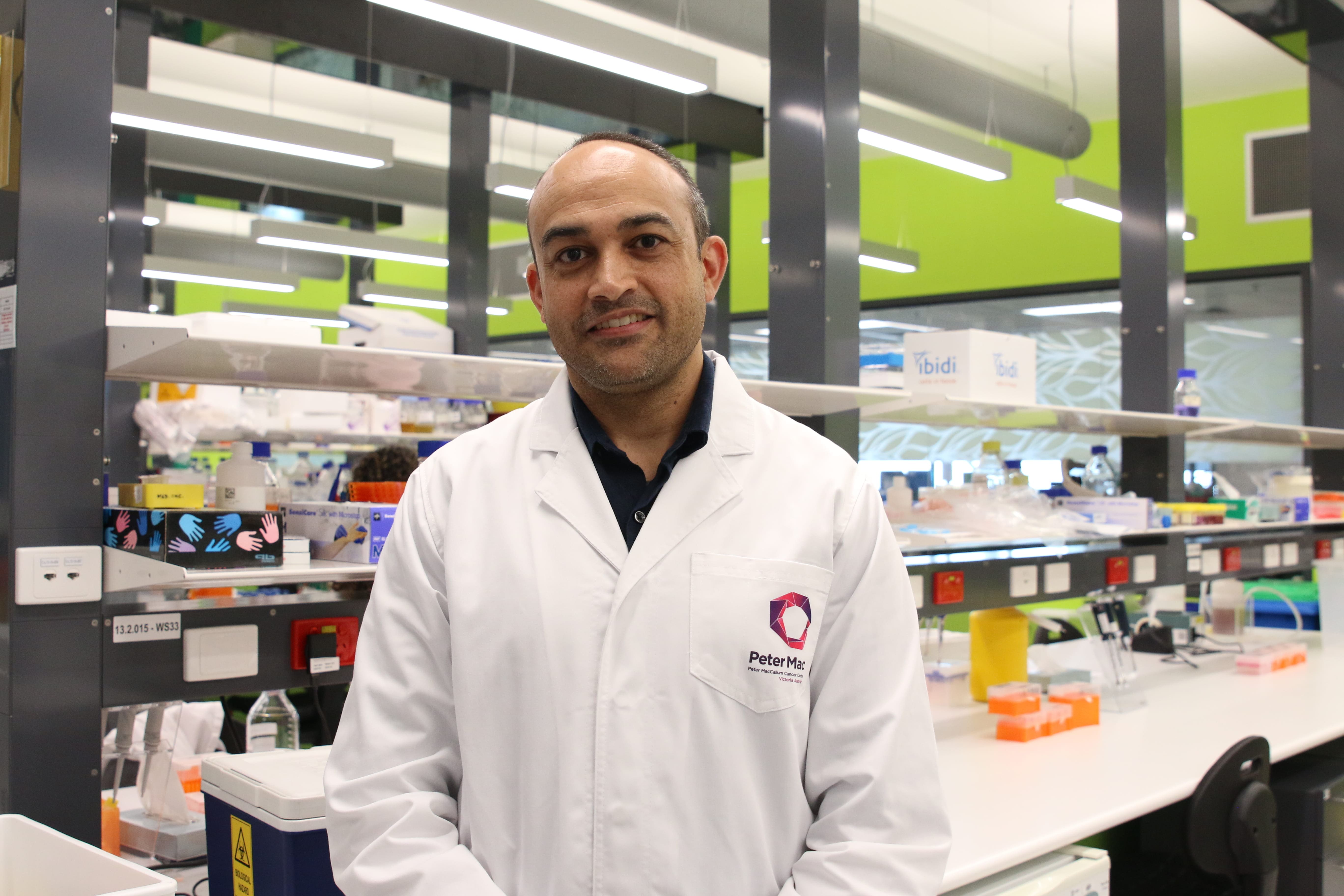 “Many of the remissions and cures we’ve seen in recent years have had immune system involvement. That’s why there’s so much excitement.” – A/Prof Ian Parish
Sarcomas, however, often behave differently.
Sarcomas arise from bone and soft tissue, and often interact with the immune system in ways we don’t yet fully understand. In many cases, they fail to trigger a strong immune response at all – or they suppress it quickly. As a result, immunotherapy has not yet delivered the same breakthroughs for sarcoma patients.
Research at Peter Mac can close the knowledge gap
By studying real tumour samples from people with rare cancers, A/Prof Parish and his team aim to map the hidden signals that allow sarcomas to evade immune attack. This essential work could help reveal what is preventing the immune system from responding – and how those barriers might be removed.
It’s detailed, technically demanding research. Each patient sample needs sophisticated analysis, and progress depends on identifying patterns across many individuals. But insights gained here could have ripple effects far beyond sarcoma.
You can accelerate vital cancer research like this.
The long-term vision is powerful: treatments that are strong where they need to be, and gentle everywhere else.
Treatments that help the immune system remember cancer – and stop it returning.
For patients facing all types of cancer, this research represents something profoundly important: more options, less harm, and more life left intact.
@Follow us on Instagram (@SupportPeterMac)