
Surviving advanced melanoma: Alex’s story of treatment, research and hope
5 min read 25 May 2026
Alex was meant to join his family in Japan for Christmas.
His wife and three kids had already flown ahead - something they did every year - while he stayed back to finish work.
But something wasn’t right.
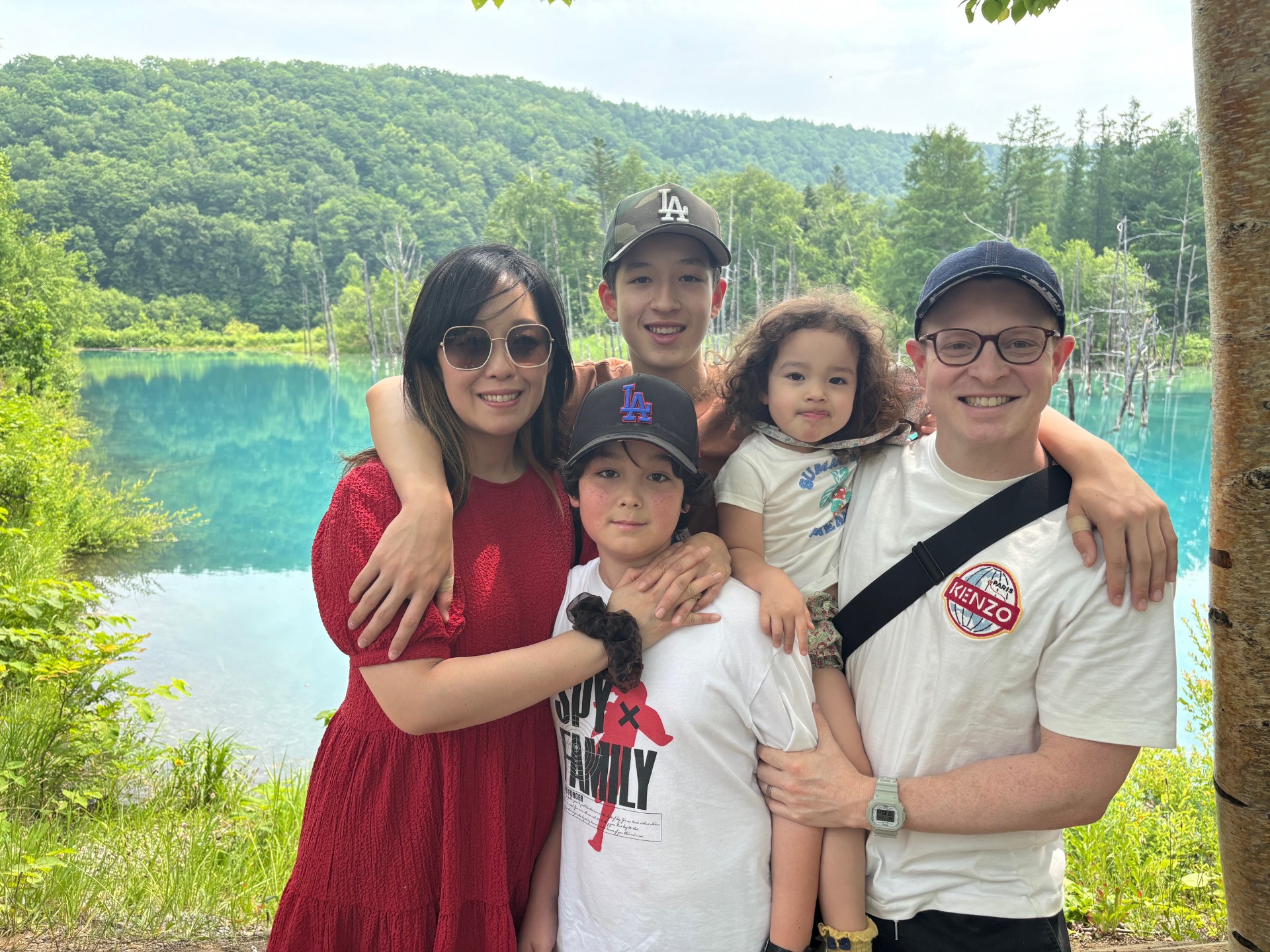 Alex was looking forward to meeting his family in Japan, until he received some lifechanging news
His neck was killing him. He was dizzy, struggling to concentrate. One afternoon, halfway through a conversation at work, he stood up and said, “I’m going home, I feel sick.”
He barely made it through the Burnley Tunnel.
At home, he vomited in the sink, collapsed onto the bed still wearing his suit, and woke hours later drenched in sweat.
“I thought, I’d better get this checked out,” he says.
His GP sent him for an MRI.
A friend who had once had a brain tumour told Alex that if a radiologist says, “We’ll call your GP,” it usually means something is seriously wrong. So when staff at the imaging clinic began gathering around the computer mid-scan, pointing at the screen, he tried not to panic.
“I remember telling myself it must be their footy tips or something,” he says.
Then the supervisor came in.
“We’ll call your GP,” they told him. “Go straight home.”
A few hours later, the clinic rang asking him to come in for an urgent appointment.
Alex had already convinced himself it was a brain tumour, so when he heard the word metastasis his first reaction was relief.
“Oh thank God,” he said. “It’s not a brain tumour.”
“No, Alex,” the GP replied. “It’s nine.”
Nine brain tumours. And one on his lung.
“I’ve referred you to Peter Mac,” the GP said. “They’re going to call you.”
Alex held himself together until he got to the car. Then he called his wife – and completely melted.
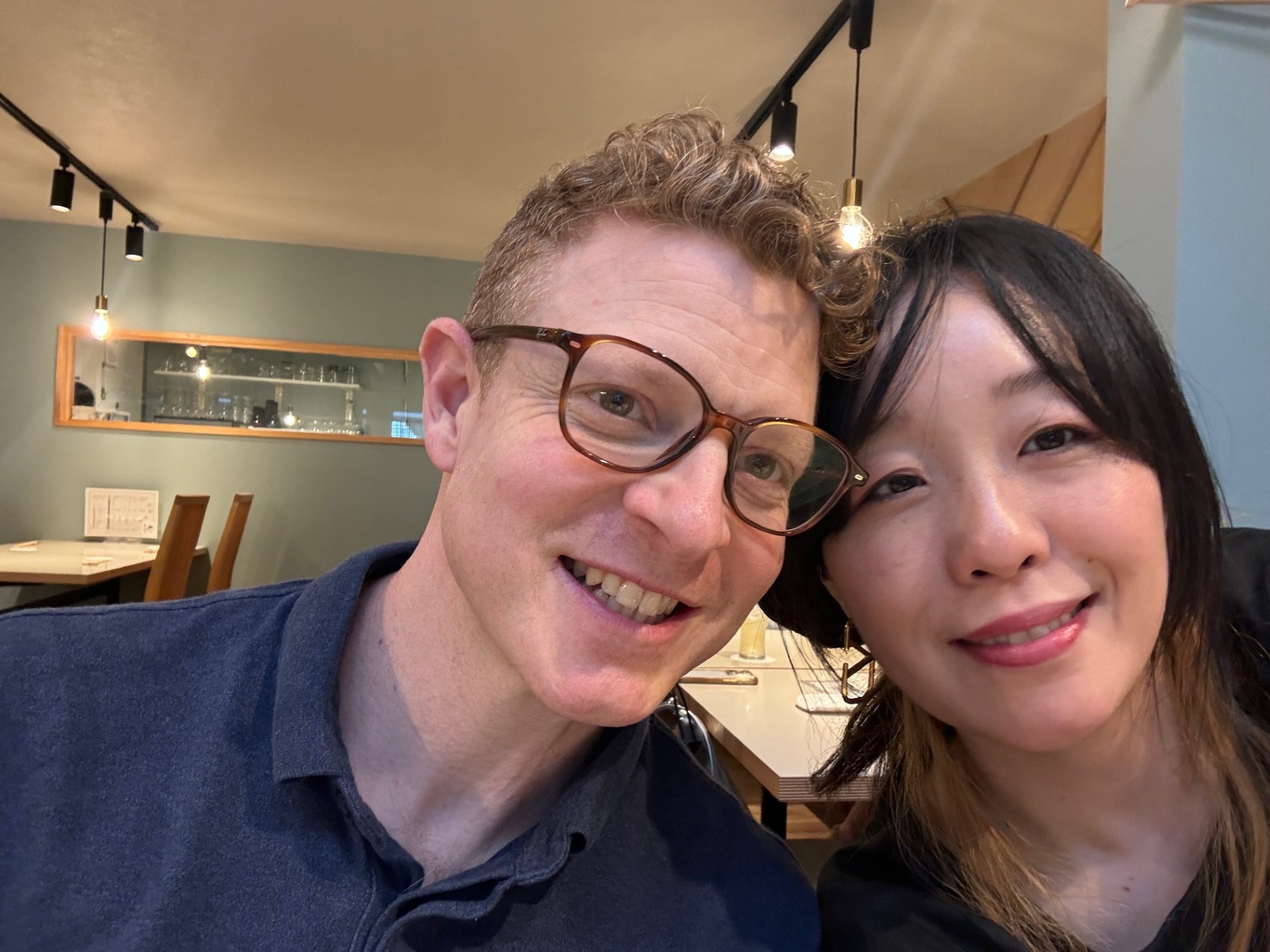 After finding out he had nine tumours in his brain, Alex immediately called his wife Yayoi
In his early forties, with three young children, Alex was juggling work, family and the everyday momentum of life.
“I had no experience with cancer,” he says. “I didn’t know the words metastatic or metastasis. I’d never taken notice of them.”
In safe hands
The next day, Alex walked into Peter Mac for the first time. There, he met medical oncologist Dr Lavinia Spain.
Further testing confirmed metastatic melanoma. A skin cancer removed years earlier had spread – beyond the skin to his brain, lungs, and lymph nodes.
“I thought I’d dealt with it back then,” he says. “Ticked it off and moved on.”
What followed was a blur of urgent decisions and new terminology. Neurosurgeons, radiation specialists and oncologists – all working together to map out a plan.
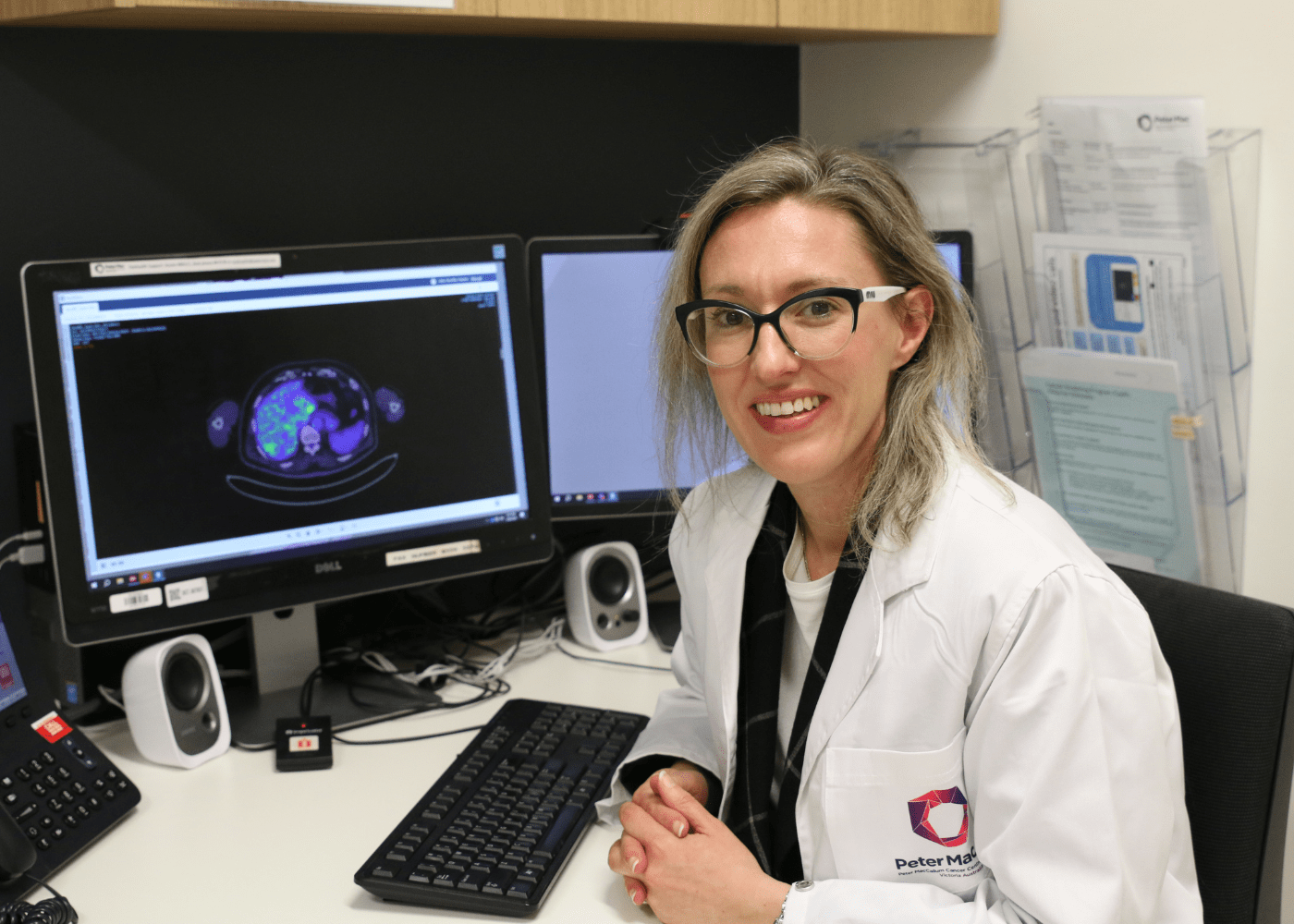 Dr Lavinia Spain, Peter Mac researcher and Alex's oncologist
“They said, ‘We’re going to do radiation.’ Okay. ‘We’re going to do surgery.’ Okay. ‘Then immediate immunotherapy.’”
“I had no idea what any of it meant.”
The first step was Gamma Knife treatment – highly targeted radiation used to treat tumours in the brain. Available at Peter Mac thanks to the support of donors, it gave Alex access to cutting-edge care that may not have been possible even a few years earlier.
He went in confident.
Bring it on, he thought.
Before treatment began, staff asked what music Alex wanted to listen to and he chose meditation music.
“Big mistake” he says. “Ambient music amplifies your thoughts.”
Once his head was secured into place and the machine started, his confidence evaporated.
I can’t breathe. I can’t talk. I have cancer. Stage four. Tumours. Lasers. What’s happening?
“That was the moment I realised I was in trouble,” he says. “Twenty seconds into a six-month game plan, I hit the panic button.”
One of the nurses handed him a soft toy. “Some people like to squeeze this,” she said.
When treatment resumed, he also asked to change the music.
“I went straight to heavy metal. I just needed to not hear myself think.”
After three days of radiation, Alex was getting prepped for surgery to remove the largest tumour – the one causing the pain in his neck.
Just before the operation, the surgeon asked if he had any questions.
Alex was curious. “How do you operate on the back of the neck?’” he asked.
“Neck?” she replied. “We’re doing brain surgery.”
It had all been explained, but Alex hadn’t taken it in.
“I woke up with the worst hangover known to mankind,” Alex says.
“Brain surgery sucks.”
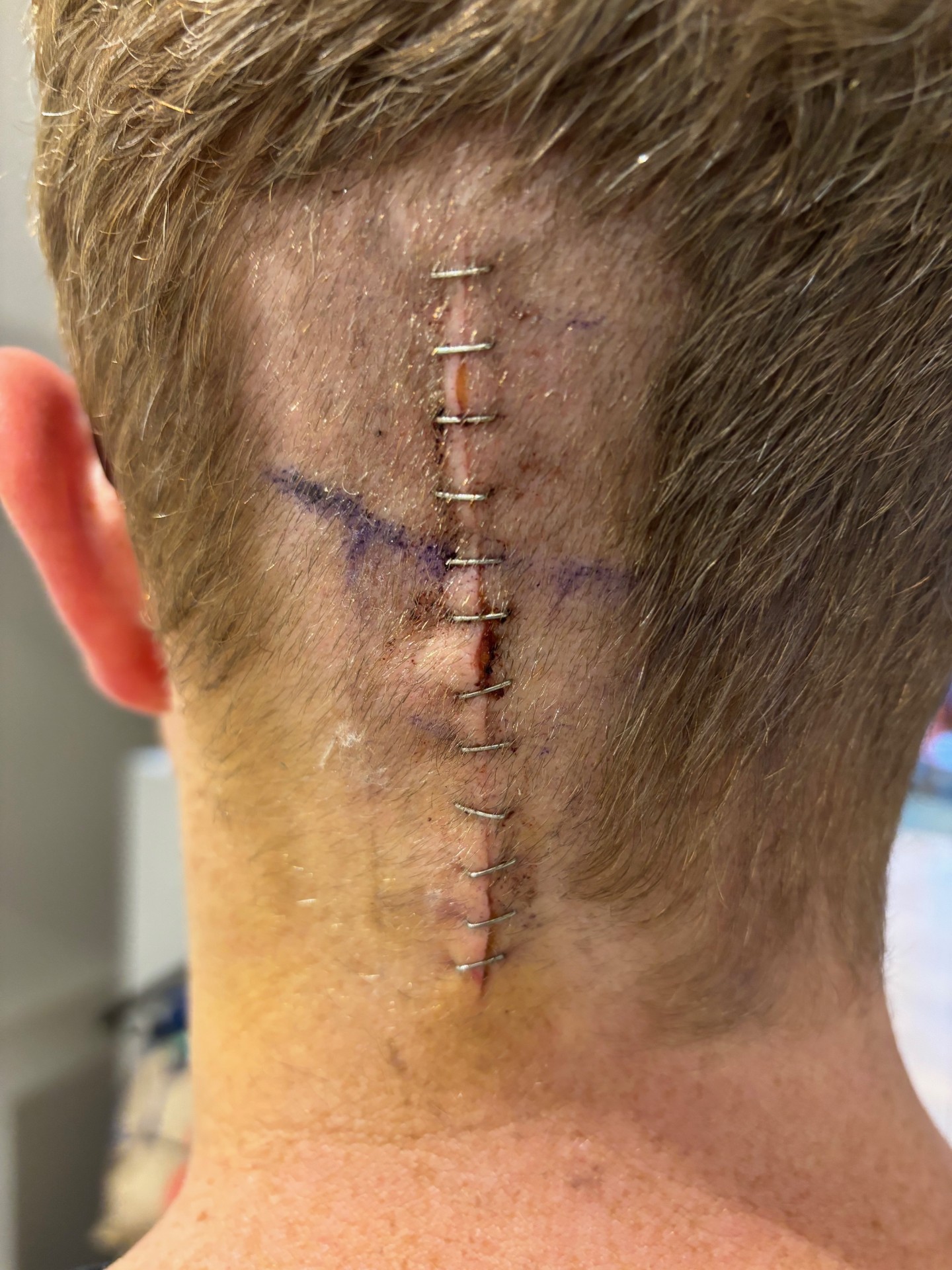 When he woke up from brain surgery, Alex woke up with a scar and "the worst hangover of his life"
And then came immunotherapy – a treatment that helps the immune system recognise and attack cancer cells. But in Alex’s case, his immune system became overactive. As well as attacking the cancer, it also began attacking his intestines and later his liver. Hospital stays followed as doctors worked to stabilise him and adjust the treatment plan.
At first, Alex approached treatment like a fight – something to win.
But over time, the treatments, side effects, and uncertainty began to take their toll, and his mindset shifted.
“I realised I couldn’t beat this by fighting harder,” he says.
“The moment I stopped fighting and let go, everything changed.”
For the first time, Alex allowed himself to be vulnerable.
Supported by his care team – doctors, nurses, psychologists – and held by his family, Alex began to rebuild.
“I couldn’t have done that without feeling safe,” he says.
At Peter Mac, Alex found himself surrounded by people who not only understood the complexity of his treatment, but created an environment where he could let go of control – and begin to heal.
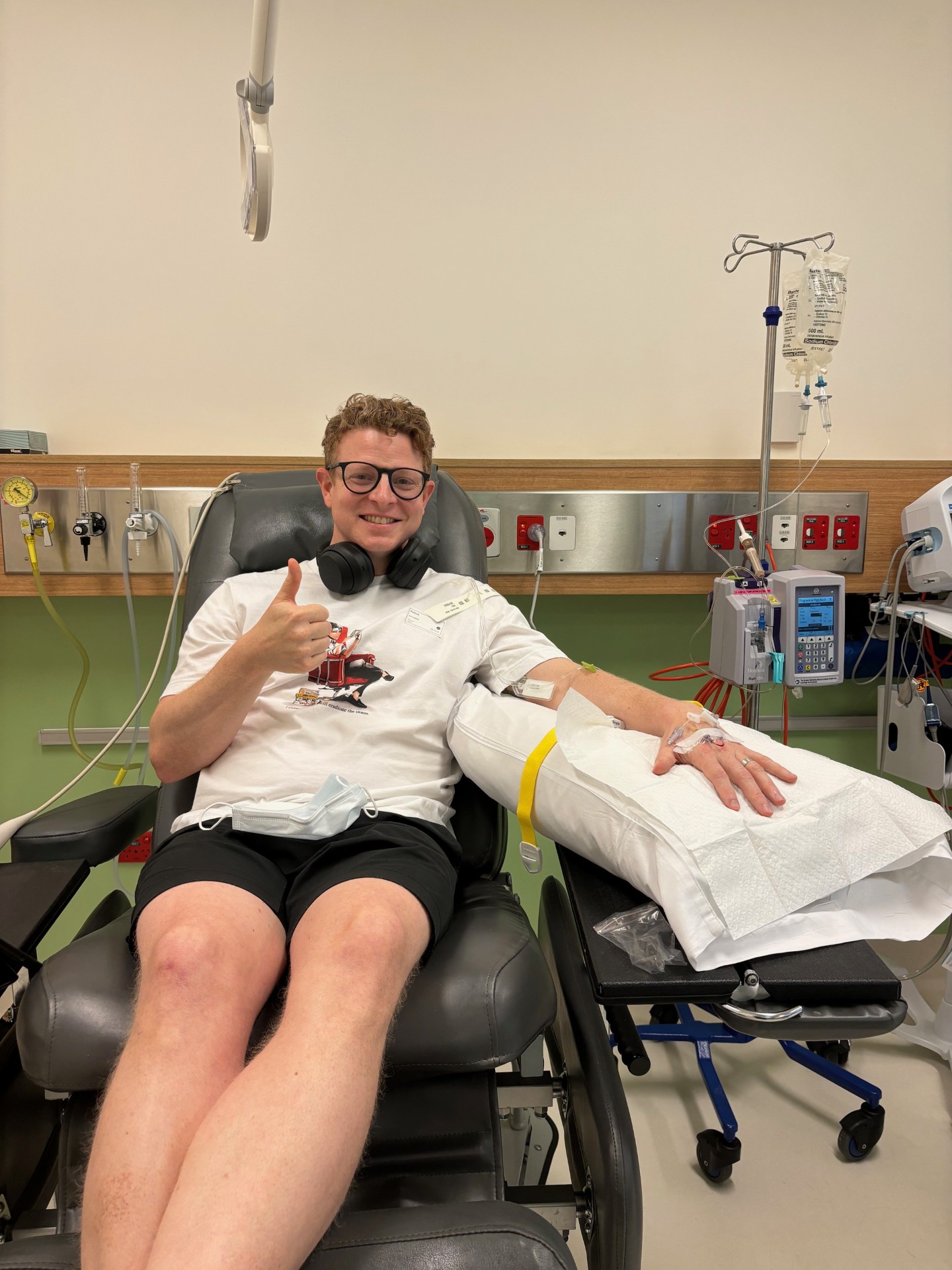 Alex receiving immunotherapy at Peter Mac
A symbol of hope
For months, Alex lived with uncertainty.
Dr Spain told him it would take time to know whether the immunotherapy was working.
“So I was just walking around thinking – either I’m not going to be here, or I might have a chance.”
When the day finally came for his first major scan results, he didn’t need the words.
“You learn to read the oncologist the second they walk in,” he says.
“I saw her and thought… yep. I’ve got a chance.”
It was working.
For Alex, the significance was impossible to ignore.
“If this was ten years ago, they wouldn’t even try,” he says.
“Even five years ago, I’d be dead.”
Advances in immunotherapy and precision radiation – built on decades of research – had changed what was possible.
Today, Alex is back with his family, finding joy in the everyday moments that once felt impossibly fragile.
“A coffee with the right person,” he says. “That’s as good as anything.”
“And I can still beat my kids at tennis,” he adds. “Which is very important.”
His focus now is simple - being present for his children and creating a safe world for them, just as Peter Mac did for him.
Because for Alex, this story isn’t just about survival.
Alex recalls wandering into the hospital lobby after one of his last radiation sessions. In the centre stood a large Christmas tree.
“A symbol of hope,” he says.
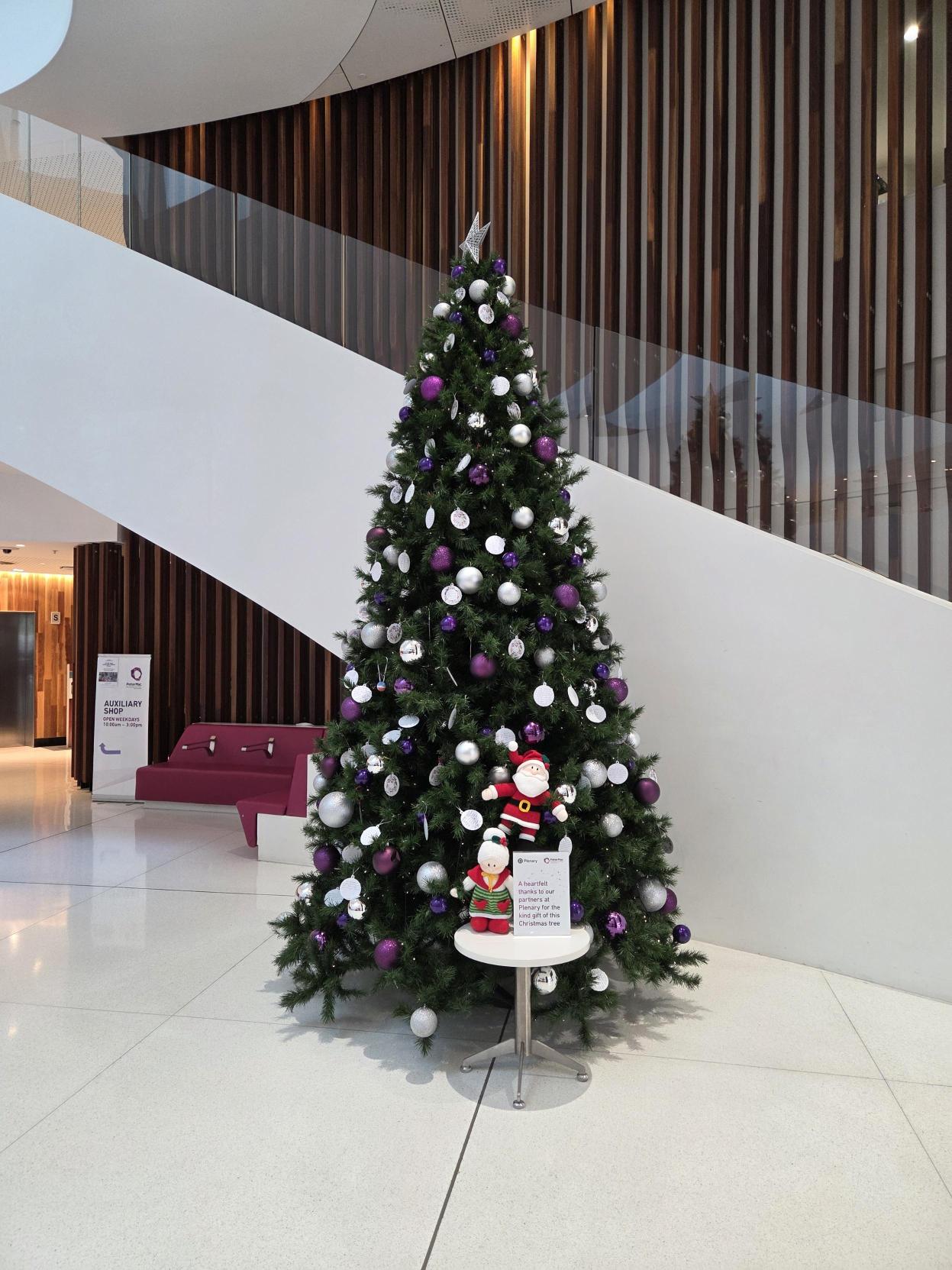 The Peter Mac Foundation Christmas tree, which bears messages of hope and gratitude every festive season.
But as he moved closer, he saw that every star, every ornament, carried a handwritten message.
“Please look after my auntie.”
“My grandma.”
“My baby.”
“That’s when it hit me,” he says.
“My cancer treatment might be ending. But for thousands of others, it’s just beginning.”
Saving the next person
For Alex and his family, supporting Peter Mac felt like a natural next step.
“It’s not about me or saying thank you for giving me back my life,” he says.
“It’s about being part of saving the next person’s life.”
During his treatment, Alex became aware of just how advanced his care had been – from Gamma Knife technology to immunotherapy.
He’d also spend time exploring the building – the spiralling architecture, the artwork, the quiet details around him.
“The elevator says 13, but I can only go to seven,” he says. “What’s happening up there?”
Above the clinical floors, he discovered, is an enormous research effort focused on improving outcomes for patients like him.
His oncologist, Dr Lavinia Spain, is part of that work. Alongside caring for patients, she is leading research to make immunotherapy more effective and safer for patients. Read more about Dr Spain's incredible work to improve treatments for melanoma.
Inspired by the care and treatment he received, Alex and his family chose to support world-leading melanoma research led by Professor Shahneen Sandhu and Professor Grant McArthur, helping drive the next generation of treatments for patients facing this disease.
They have also supported state-of-the-art technology within Peter Mac’s Research Flow Core, which is already helping researchers test potential cancer therapies faster and at greater scale.
 Alex enjoying precious moments with his daughter, Emilia
For Alex, advances in cancer research are not abstract. They are the reason he is alive.
“The advancements in treatment gave me a chance," he says.
“And they’ll give others one too.”
@Follow us on Instagram (@SupportPeterMac)