
How an innovative clinical treatment helped Stuart defy a stage 4 prostate cancer prognosis
5 min read 17 June 2026
A shock diagnosis of advanced prostate cancer turned Stuart’s life upside down.
In March 2022, Stuart went in for his annual men’s health check as he’d always done. He was feeling good, living a healthy lifestyle, and noticed no signs of anything out of the ordinary.
But a call from his GP the very next morning told him otherwise. His PSA levels – the key marker for prostate cancer – were slightly elevated.
“At that time, I thought not to worry, because I was a cyclist, and often, riding a bike can affect PSA readings.”
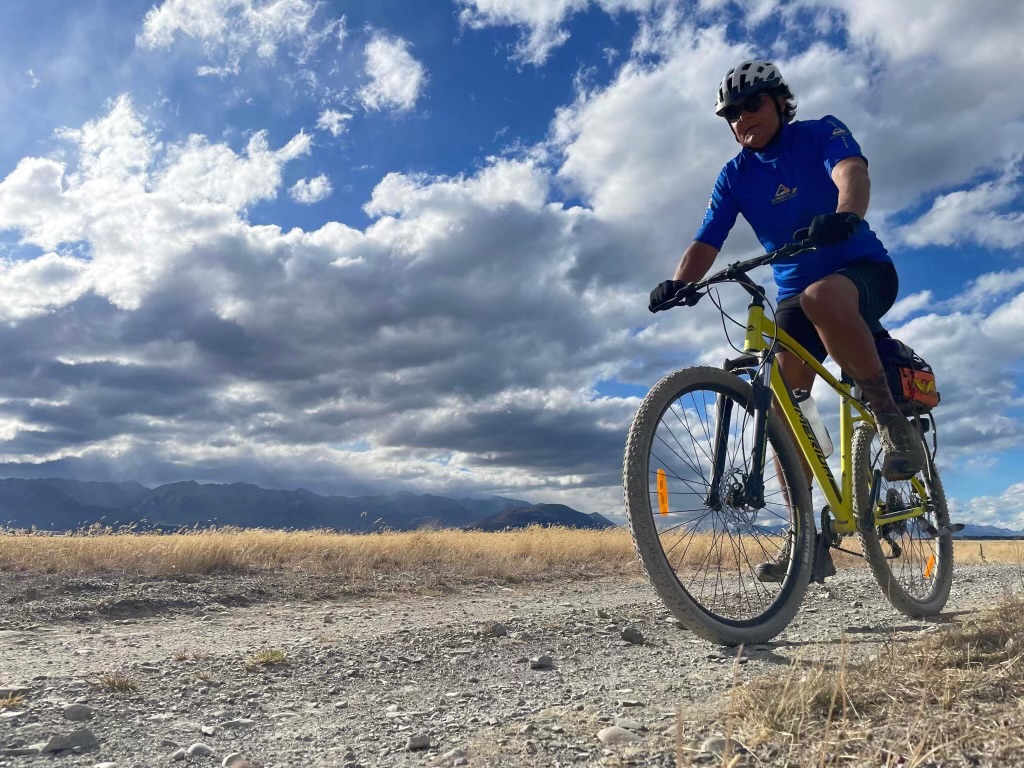 Before being diagnosed with cancer, Stuart lived a healthy and active life
Nonetheless, his GP asked him to do another blood test as soon as possible just to be safe. Stuart took his second blood test three days later – and this time, the increase in his PSA levels was significant.
After being examined by a specialist and undergoing PET scans came the bad news. Stuart was diagnosed with Stage 4 prostate cancer. And the cancer had spread into his lymphatic system and bones.
The diagnosis was an “incredible blow” to Stuart and his family. Although his father had passed away from a different type of cancer, he lived a healthy and active life – eating well and staying active.
”I was basically doing everything that I could possibly do to live a wholesome and healthy life. I felt, in many ways, that I was doing the right things to prevent cancer.
“Nothing prepares you for the shock of getting that diagnosis.”
After retiring earlier than he had hoped from his career as an academic in rural health research, Stuart set out on a difficult journey with cancer.
“Things looked pretty dire”
Stuart was very quickly put onto ‘first-tier treatment’ following his diagnosis. He had a highly unusual presentation. His PSA score was in the single digits, which usually means the cancer was still localised – but nonetheless, he had cancer tumours throughout his lymphatic and skeletal systems.
”The oncologist was concerned about my presentation, and things looked pretty dire. But I was hopeful that treatment could hold it for a bit.”
First, Stuart started receiving hormone therapy. Then, chemotherapy, wiped out his neutrophils meaning his immune system was compromised.
“I was hospitalised for a number of days because I literally had no immunity – the chemo had damaged my white blood cells.”
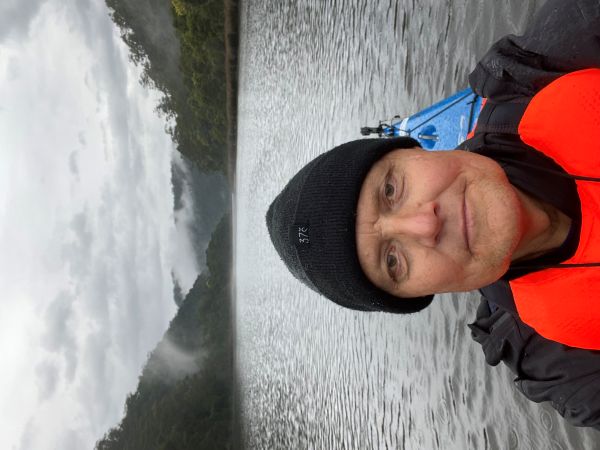 Initial cancer treatments held Stuart's cancer for a bit, but he began to run out of options
Stuart continued chemotherapy once he’d rebuilt his immunity. By the beginning of 2023, Stuart was still on hormone therapy. He was eventually put onto second tier hormone therapy. During this time, his PSA levels dropped, but this only held for three months. He was quickly running out of treatment options. After a few months, second tier hormone therapy was no longer effective, and a breakout of tumours on his rib saw him undertake radiation therapy.
This made for a “pretty awful time” for Stuart.
”I was doing a lot of things in my own life to try to come to terms with cancer, and my prognosis.
“I started taking the of measures that I could, what I could do to play my part in giving myself a reasonable chance of longevity, and I felt that those were really powerful things for me, which kept me grounded.”
The side effects of treatment added to these challenges. The hormone therapy brought about sexual intimacy issues. Fatigue meant he had to stop hobbies such as swimming, and the pride he had taken in his physicality and fitness took a major hit as he lost muscle mass and gained weight.
“Even on my worst days, I would get out and walk, even if I only walked 100 metres. I would push myself physically to a point where I didn’t let the fatigue overwhelm me. But it was difficult and incredibly emotionally draining for me.”
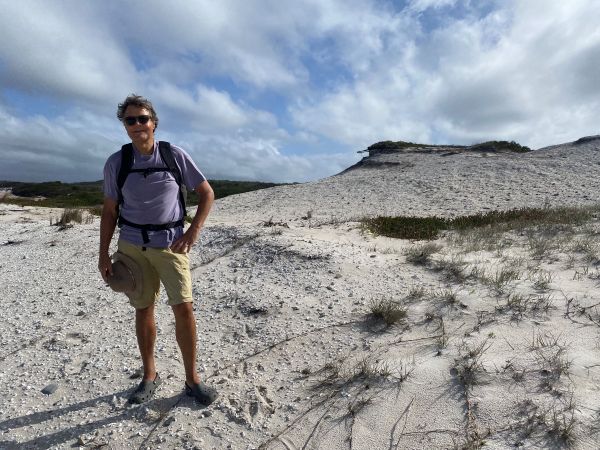 Treatment side effects prevented Stuart from enjoying his many active hobbies
New hope through innovative research
Luckily for Stuart, a new treatment opportunity arose. Through his involvement with prostate cancer organisations, he learned that Peter Mac had an innovative theranostics clinical program that might help him.
Stuart, who is based in Tasmania, approached his oncologist about heading to Melbourne to try this treatment at Peter Mac. The doctor told him that this program was only effective for about 30% of people, but Stuart remained determined.
“I thought, 30% is better than 0%.”
Stuart pushed ahead and fortunately, he was eligible for clinical treatment. He was soon undertaking lutetium treatment – a type of targeted nuclear medicine – at Peter Mac.
Early signs were positive. The tumour sites began to shrink, and after about six months, the treatment had been effective. Stuart finished his lutetium treatment after five rounds in December 2023.
As this was a fairly new treatment approach at the time, no-one was sure how long that would hold Stuart’s cancer. Doctors gave him about an extra four to five months, and Stuart took the time to “live his life” for this period.
“I planned a lot of things. My wife and I went cycling in New Zealand – we did a few wonderful things.”
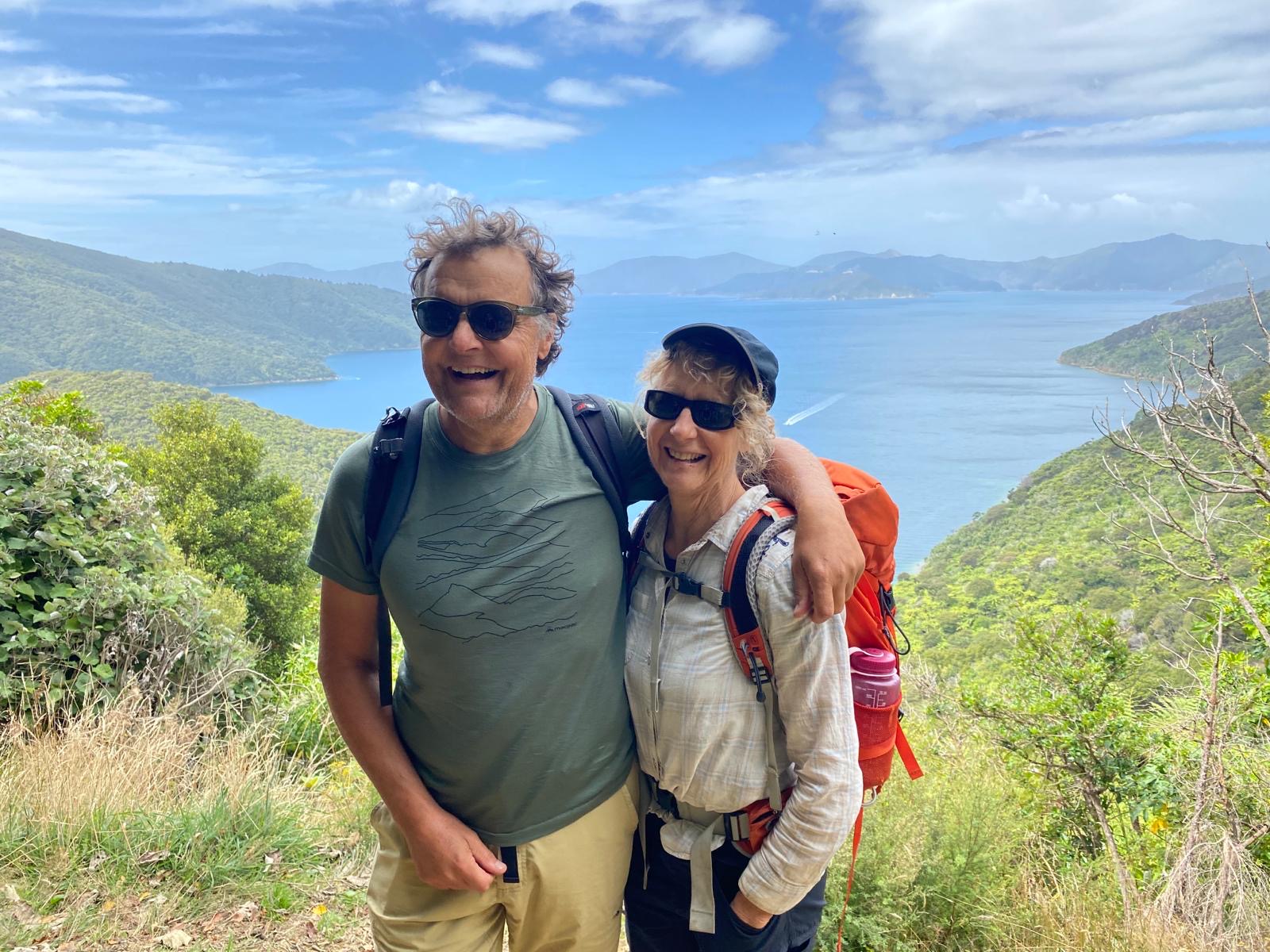 Stuart took the time to enjoy life after being treated at Peter Mac
Stuart had anticipated that his PSA levels would rise again by April 2024. But amazingly, they didn’t. And as of June 2026, they haven’t risen since.
“My oncologist can’t make heads or tails of it. He said it’s really unique – it’s brilliant.”
Today, Stuart remains on hormone therapy, but hasn’t received any further treatment since finishing lutetium therapy in 2023. Thanks to the power of innovative cancer research at Peter Mac, Stuart has been able to hold onto life for much longer than expected, against the odds.
Seeing the light in the dark
Since being treated at Peter Mac, Stuart has been able to return to many of his old beloved hobbies. He is again exercising regularly – swimming, yoga, Pilates, kayaking and cycling. He took up painting again during his treatment, finding it meditative and calming. He loves gardening and is learning a new language.
Going through prostate cancer was a life-defining experience for Stuart, one that brought dark times and confronting realisations.
“For the first time in my life, I was actually facing mortality. I was facing the reality that I may only have months to live.
“To make matters worse, when you get a diagnosis, you’re dealing with this incredible tsunami of information, all of it is negative. I think for the first six to eight weeks of post-diagnosis, I don’t think I smiled or laughed with anyone I spoke to.
“You feel the pain. You can’t do the things you love to do anymore. You know tomorrow is an uncertainty. You don’t know whether this treatment is going to last.”
Even during the heavier moments, Stuart held on to hope as he navigated cancer.
“You have to find the light between the darkness and the cracks. You have to do what you can to focus, you have to believe there is hope.”
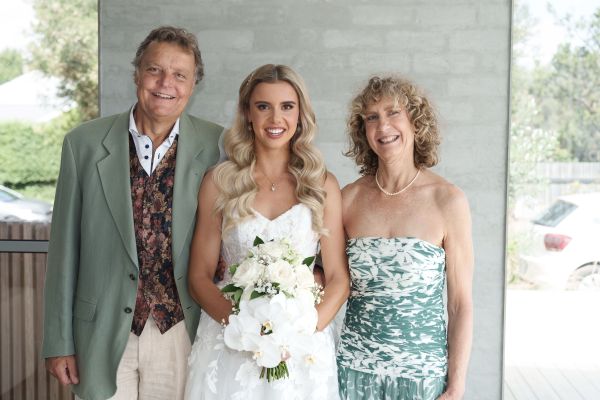 These days, Stuart takes nothing for granted, and cherishes his family and relationships
Having made it through these challenges, Stuart meets each day with gratitude and a full heart, taking nothing for granted.
“Every morning, I sit quietly with my dog as I watch the sun come up. I’ve done that every day since I was diagnosed.
“I learned a lot about relationships, what’s important in life, and it’s brought my family closer together. I tell my friends I love them all the time. I tell my wife I love her every day. We’re so busy with the business of life, we never say that to one another. But I don’t make any apologies for being sentimental.
“It’s a case of waking up every day, saying, ‘Well, what can I do that’s good for myself, and what can I do that might help others?’”
Encouraging men to seek support
Early in his cancer journey, Stuart found meaning through engaging with the prostate cancer community, including speaking with a lot of other men who’d faced a prostate cancer diagnosis. He has some key takeaways about how men navigate their cancer experiences.
“Men often might not talk about their cancer, sometimes not even tell their partners – this creates so much stress, anxiety and depression inside, which is so wrong.”
A naturally open person, Stuart seeks to set an example for other men to talk about their prostate cancer experiences and to seek support.
“We need to talk about it. We need to share it. We need to encourage other men to be open.
“If I didn’t, I would hold everything in and internalise all my thoughts and emotions. I’d be no good to myself or my family.”
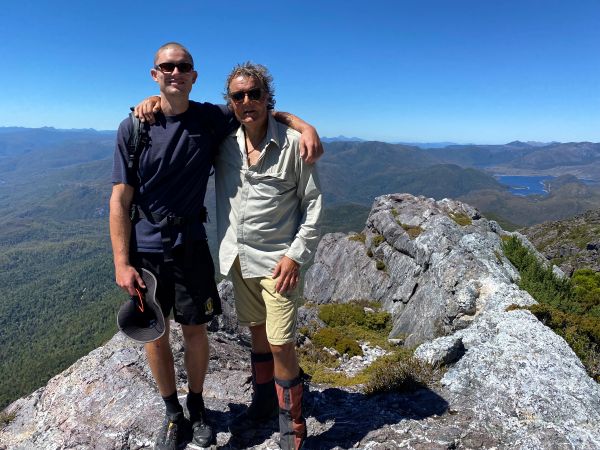 Stuart encourages other men to go to their doctors, seek support and share their experiences
And crucially, he encourages men to undergo their annual health checks and to speak to their doctors if they believe they are at risk.
“Don’t wait for the signs. I didn’t have any, and other men have said exactly the same thing to me. If you believe you’re a cancer risk, go to your GP, have your PSA done.”
Supporting a better future with Peter Mac
Since finishing his lutetium treatment, Stuart generously continues to support Peter Mac through volunteer work. Stuart’s volunteer work in various project research committees at Peter Mac has helped him better understand his cancer diagnosis and hopefully help other men with a similar diagnosis.
“We do live in a golden age of cancer treatment. And I want to help Peter Mac because as a former Rural Health academic, I understand research, and I understand health.
“I’m very grateful to Peter Mac. It’s a wonderful organisation. And I really want to do something positive for others, if I can in any way.”
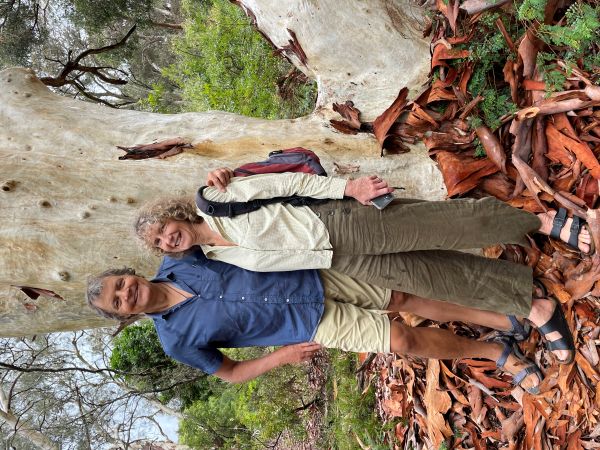 Grateful to Peter Mac, Stuart generously gives back to support lifesaving research and other people with cancer
Stuart’s story highlights how Peter Mac’s cancer research, including the innovative and emerging treatment options offered through clinical trials, can transform outcomes for cancer patients who otherwise face an uncertain future. Thank you for supporting work that saves lives and gives more time to people such as Stuart.
@Follow us on Instagram (@SupportPeterMac)